Gutter Cleaning Hackettstown: What Every Property Owner Should Know

If you own a home, rental, storefront, or small commercial building in Hackettstown, gutter maintenance is not a cosmetic chore. It is part of protecting the structure itself. Gutters sit at the roofline, out of sight most days, and that is exactly why they get ignored until something starts staining, sagging, leaking, or rotting.
The phrase Gutter Cleaning Hackettstown might sound like a routine service search, but the issue behind it is more serious than many property owners realize. A working gutter system controls roof runoff, moves water away from siding and foundations, and helps prevent the slow damage that turns a manageable maintenance bill into a repair project. When those channels clog with leaves, pine needles, seed pods, roof grit, and debris from nearby trees, water stops behaving the way the house was designed to handle.
In a place like Hackettstown, where weather can shift sharply across the year, gutters take a beating. Spring pollen and seed litter, summer storms, fall leaf drop, and winter freeze-thaw cycles all stack stress onto the same system. Even a house that looked fine in August can show overflow marks by November and ice buildup by January. A commercial property with lower-pitch roof sections can have its own version of the same problem, often hidden behind fascia or parapet details until interior leaks appear.
Most people think of gutter cleaning as a ladder job. In practice, it is a drainage inspection, an early warning system, and a practical way to extend the life of several connected parts of the building envelope.
Why clogged gutters cause more damage than most owners expect
When gutters clog, the first symptom is usually visible overflow during rain. Water pours over the front edge, spills behind the gutter, or shoots out at corners and downspout joints. That part is easy to spot. The more costly effects usually happen gradually.
Water that spills near the foundation can saturate the soil around the base of the house. On some lots, especially those with less-than-ideal grading, that repeated saturation contributes to basement moisture, crawlspace dampness, or settlement concerns over time. It does not take a dramatic flood to create a problem. Repeated wetting in the same area is enough.
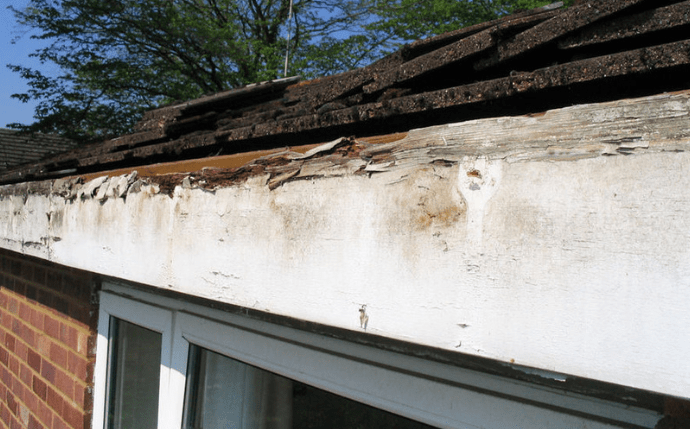
Overflow also affects fascia boards, soffits, siding, and trim. Painted wood peels. Composite materials stain. Fasteners loosen. Gutters that hold wet debris for months at a time get heavier than they were meant to be, and that weight starts pulling on spikes, ferrules, hidden hangers, and seams. A run that was once properly pitched can flatten or reverse-slope in one section, making the next clog form even faster.
On roofs, backed-up gutters can trap water at the edge of shingles. In colder weather, that water may freeze, contributing to ice buildup that lifts shingles or forces moisture into vulnerable areas. In warmer months, constant damp debris can encourage mildew and create ideal conditions for mosquitoes.
This is where a simple cleaning pays for itself. Not because it makes the gutters look tidy, but because it interrupts a chain of damage while the fix is still straightforward.
What builds up in gutters around Hackettstown
Property owners often imagine autumn leaves as the main culprit, and they are certainly part of it, but most clogged gutters are a mixture of materials. Fine roof granules from aging shingles collect at the bottom and form a gritty sludge. Maple seeds, oak tassels, twigs, and pine needles weave together and catch even more debris. If nearby trees overhang the roof, small branches can fall into valleys and wash toward the downspouts. Add a season or two of moisture and the whole mass compacts.
On some properties, especially where gutters stay shaded, that debris begins to decompose into a dark, soil-like layer. At that point, you are not just clearing leaves. You are removing a wet planting bed that can support weeds or volunteer seedlings. It is not unusual to see small sprouts growing from neglected gutters by late spring.
A two-story home with mature trees may need very different maintenance than a one-story ranch in a more open lot. The same goes for detached garages, rear porches, additions, and outbuildings. People often remember to check the front of the house and forget the back roofline, where the real clog is hiding above a deck or fenced yard.
The warning signs most owners miss
Some signs are obvious, like water spilling over the gutter edge in a storm. Others are subtle enough that they get dismissed as ordinary wear.
Staining on siding directly below the gutter line often means repeated overflow. Black streaks or green algae marks can indicate water is running where it should not. Peeling paint on fascia boards deserves attention. So do rust spots at seams, gutter sections pulling away from the house, or plants sprouting in the trough.
Inside the house, clues can be even easier to misread. A damp basement corner, musty smell, or discoloration near an exterior wall does not automatically point to gutters, but poor drainage is a common contributor. On commercial buildings, tenants may report drips near entry points or persistent puddling near sidewalks long before anyone looks up.
One issue I have seen more than once is the “working downspout” that is not really working. Water appears to enter it during rain, but a clog lower in the vertical section or at the outlet causes backup. The gutter overflows at one end, and the owner assumes the entire line is undersized. After clearing the blockage, the system often performs perfectly well.
How often gutters should be cleaned
There is no honest one-size-fits-all answer. The right schedule depends on tree coverage, roof design, weather exposure, and how much risk you are willing to carry between inspections.
For many residential properties, twice a year is a reasonable baseline, usually once after spring debris has settled and once after the main fall leaf drop. That said, homes under heavy tree canopy may need more frequent service. A property bordered by pines can gather needles year-round. A building with several roof valleys feeding one short gutter run can clog faster than a larger, simpler roof.
If your home has a history of overflow, ice issues, or basement moisture, annual or “when it looks bad” maintenance is rarely enough. It is better to inspect on a schedule than react after a storm exposes the problem. Commercial properties may need a more formal routine, especially where public walkways, entrances, or landscaped areas are affected by runoff.
A useful rule is to think in terms of drainage performance, not calendar dates. If the gutters hold standing water after rain, if downspouts discharge weakly, or if debris is visible from the ground, the schedule is probably too loose for that property.
Why Hackettstown weather makes timing matter
Seasonal timing changes the stakes. Late spring cleaning clears out seed litter, pollen-heavy sludge, and the residue left by winter weather. If this material stays packed in the gutters through summer storms, it often hardens and becomes harder to remove. Then fall arrives, adds leaf volume, and turns a partially blocked system into a full stoppage.
Autumn is the period most owners think about, and for good reason. Falling leaves can fill low spots and cover downspout openings quickly. But the real trouble often arrives after the leaves, when temperatures drop. Any water trapped by debris has a greater chance of freezing, and frozen sections add both weight and stress.
Winter itself is not ideal for routine cleaning if conditions are icy or snow-covered. At that point, the focus shifts to safety and damage control. That is why preventive service before sustained cold weather matters so much. It is easier to remove leaves than to deal with frozen blockages, ice loads, and water intrusion.
For anyone searching for Gutter Cleaning Hackettstown, this seasonal cycle is the practical reason the service matters locally. You are not just clearing out a nuisance. You are resetting the drainage system before the next weather phase exploits its weak points.
DIY cleaning versus hiring a professional
Many property owners can clean a straightforward one-story gutter system safely if they have the right ladder, stable ground, and enough caution. The trouble is that most people underestimate the risks and overestimate what they can inspect from a ladder in a quick afternoon.
A proper gutter cleaning is not just scooping out debris. It includes checking hangers, testing downspouts, observing pitch, looking for seam failure, and spotting signs of roof-edge or fascia deterioration. On taller homes, steep grades, or complex rooflines, the safety risk rises fast. Add wet leaves, power lines, uneven landscaping, or second-story sections above lower roofs, and the job becomes less casual than it sounds.
There is also a quality difference between “debris removed” and “system functioning.” I have seen plenty of gutters that looked clear from above but still failed because the downspout elbows were jammed with compacted muck. The water test after cleaning is where a lot of hidden issues show themselves.
For landlords and commercial owners, hiring out the work often makes even more sense. It creates a service record, reduces liability from improvised ladder use, and makes it easier to pair cleaning with minor repairs before they become service calls from tenants.
What a thorough gutter cleaning should include
Not every service visit is equal. Some crews remove visible debris and move on. Others treat the https://keeganiiue412.moderncairn.com/posts/the-homeowner-s-guide-to-gutter-cleaning-in-hackettstown work as a full drainage check. The difference matters.
A competent cleaning usually includes hand-removing or flushing debris from all gutter runs, clearing and testing downspouts, and checking whether water exits properly away from the structure. It should also involve looking at the physical condition of the system. Loose brackets, separated seams, crushed sections, improperly pitched runs, and downspout discharge issues do not fix themselves.
On houses with gutter guards, service may still be necessary. Guards reduce some types of buildup, but they do not eliminate maintenance. Fine debris can accumulate on top, under certain guard styles, or inside downspouts. Some guards work well under the right tree conditions. Others create a false sense of security. A property owner who has installed guards and stopped inspecting altogether often gets an unpleasant surprise later.
One of the more common repair decisions involves small leaks at seams or end caps. If the gutter is otherwise sound, a targeted repair can buy useful time. If the metal is rusting through in multiple places, pulling away from the fascia, or pitched poorly across several sections, repeated patching may not be the best use of money.
Questions worth asking before you book service
Choosing a company for Gutter Cleaning Hackettstown should be more than a price comparison. Cost matters, but so does what is actually being done on the roofline.
Here are a few questions that help separate a basic debris removal visit from a more reliable service:
- Will the downspouts be fully cleared and tested?
- Are minor issues like loose hangers or small seam leaks noted during the visit?
- Is cleanup of the ground area included?
- Can they handle taller or more complex roof sections safely?
- Will they point out signs of drainage or roof-edge damage if they see them?
A short conversation around these points tells you a lot. If the answers are vague, the scope probably is too.
The role of gutter guards, screens, and covers
Gutter protection systems are often marketed as the end of maintenance. In reality, they shift the maintenance pattern more than they eliminate it. That does not mean they are useless. On the right house, with the right tree load and the right product, they can reduce how quickly large debris enters the trough. They can also cut down on the amount of hand removal required during cleanings.
The trade-off is that certain guards struggle with fine debris, heavy pine needles, or roof grit. Some clog on top. Some make cleaning more labor-intensive because sections need to be removed to access blockages below. Poorly installed covers can even interfere with water capture during hard rain if the flow overshoots the opening.
If you are considering them, think of guards as part of a system, not a replacement for observation. The real question is not whether a guard exists, but whether it performs well on your roof, under your tree conditions, through a full year of weather.
Small gutter problems that turn into big ones
A lot of expensive repair work starts with a very ordinary issue that went unchecked. One loose gutter spike becomes a sagging section. A sagging section starts holding water. Standing water accelerates corrosion, attracts debris, and adds weight. Then the fascia softens from repeated wetting, and now a simple reattachment becomes carpentry.
The same pattern shows up at downspout discharge points. If water empties too close to the foundation, you may not see immediate damage. Over months and years, however, that constant moisture can affect landscaping, create slippery areas, stain masonry, and contribute to water entry where the structure is already vulnerable.
I have also seen newer owners inherit problems from years of neglect. The gutters themselves may only be a few seasons old, but if they were installed onto compromised fascia or connected to poorly planned drainage paths, cleaning alone will not solve everything. That is why inspection and judgment matter. Not every water problem near the roofline is fixed with a scoop and a hose.
Budgeting for maintenance instead of emergency repair
Property maintenance gets easier when you stop treating gutters as an occasional nuisance and start treating them as predictable upkeep. Routine cleaning is almost always less expensive than repairing rotted trim, repainting damaged siding, addressing basement moisture, or replacing failed gutter sections under emergency conditions.
For landlords, this is especially important. Tenants may notice leaks or overflow only after the damage has begun. Scheduled service reduces the chance of weekend calls during storms and gives you documentation that maintenance was performed. For owner-occupied homes, the savings are not just financial. Preventive care avoids the disruption of dealing with water where it does not belong.
The exact price of gutter cleaning varies with height, access, debris load, and layout complexity, so broad promises are rarely useful. What is dependable is the pattern: houses that get maintained on schedule tend to need fewer surprise fixes.
When cleaning is not enough
Sometimes a clogged gutter is only the visible symptom. If the system is undersized for the roof area, badly pitched, improperly sloped at installation, or paired with too few downspouts, you may continue seeing overflow even after a complete cleaning. Likewise, if the surrounding grade slopes toward the house, clean gutters help but do not fully solve the drainage issue at ground level.
This is where a more experienced eye matters. A professional should be able to tell the difference between a maintenance problem and a design problem. If one corner repeatedly overflows despite being clear, that section may need adjustment or an added downspout. If water exits properly but still collects near the foundation, the discharge path may need extension or the grade may need correction.
A good diagnosis saves money because it prevents repeated cleaning from being used as a stand-in for repair.
What smart property owners in Hackettstown tend to do
The owners who stay ahead of gutter problems are rarely obsessive. They are simply observant. They check the system after major storms. They pay attention to staining, pooling, and loose sections. They do not assume new gutters are trouble-free forever, and they do not wait for interior damage before acting.
They also understand that gutters are part of a chain. Roof runoff, fascia condition, downspout performance, splash control, grading, and foundation moisture all connect. Ignoring one link usually stresses the next.
For anyone evaluating Gutter Cleaning Hackettstown, the practical takeaway is simple. Clean gutters are not about appearance. They are about controlling water before it starts choosing its own path through your property. That is why regular service, thoughtful inspection, and timely repair matter so much. A few hours of maintenance at the roofline can prevent months of frustration everywhere below it.
Just Gutters LLC
Address: 262 Main St, Hackettstown, NJ 07840
Phone number: +12013319454
FAQ About Gutter Cleaning Hackettstown
How much should a gutter clean cost?
Professional gutter cleaning typically costs between $163 and $333, with a national average of around $210 to $250 for a standard-sized home.
What months should you clean gutters?
You should clean your gutters twice a year—once in late autumn (November to December) and once in late spring (April to May).
Is it worth paying for gutter cleaning?
Yes, paying for gutter cleaning is worth it because it prevents thousands of dollars in water damage, roof leaks, and structural repairs.